Minor works: the responsible declaration
What everyone still calls obra menor: what gets filed, what a technician signs, and when you may start.
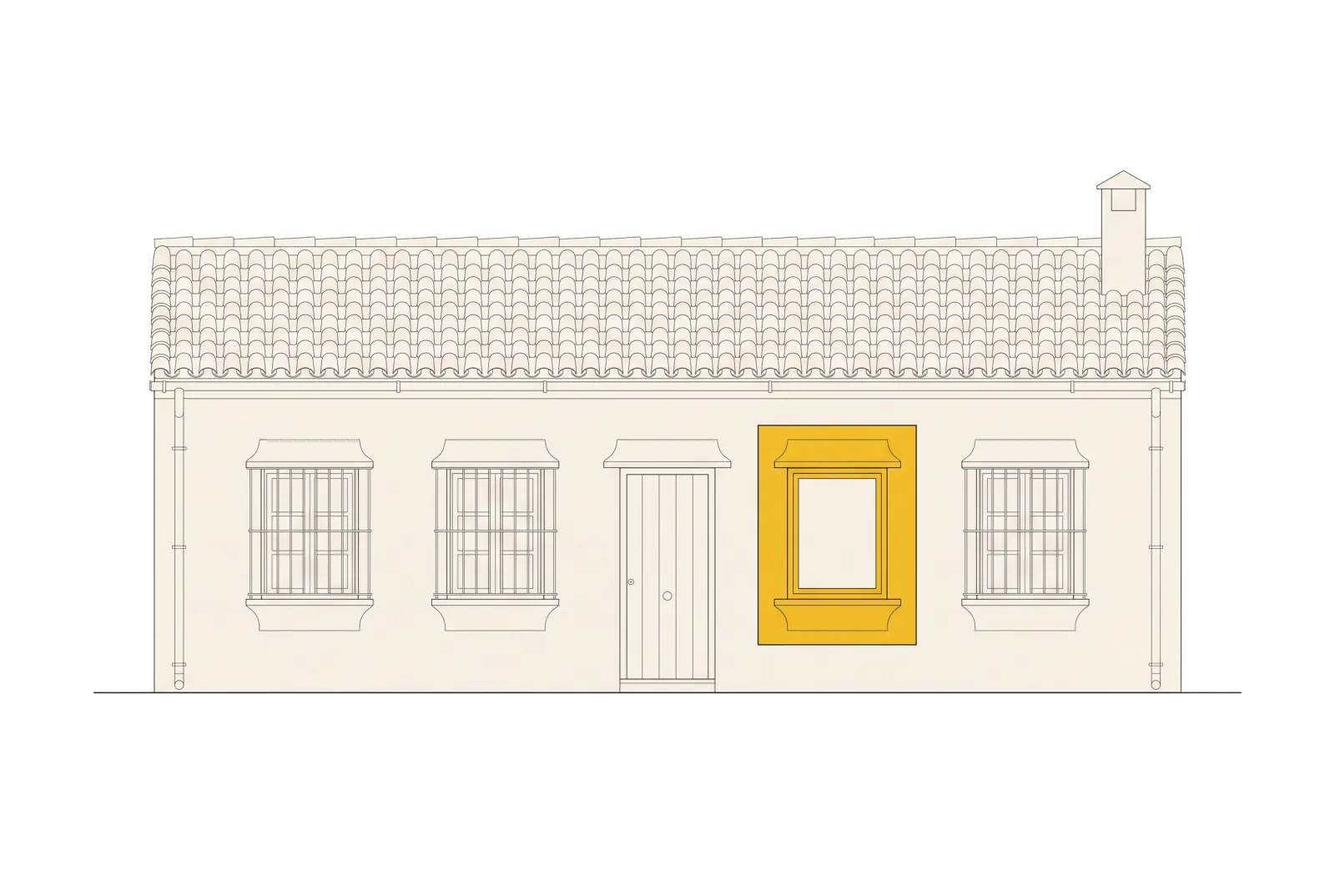
If you arrived looking for a minor works licence, the first thing to know is that in the Valencian Community none is granted any more. What used to be one is now a responsible declaration, and that is not a change of name: it changes who decides and when you may start. The second thing to know is better than the first.
Under the TRLOTUP, the regional planning act, alteration work that does not create a new building is subject to a responsible declaration — article 233 — and filing it entitles you to start immediately. There is no decision to wait for. In exchange, what you declare binds you.
What minor works are today
A responsible declaration is a document in which the owner declares, on their own responsibility, that the work meets what is required of it, filed with whatever technical documents apply. Article 241 gives it two effects worth reading slowly:
- Filed complete, it entitles you to start the work immediately.
- It has the effects the rules attach to the granting of a licence, and can be relied on before the administration and before anyone else — the neighbour, the bank, the buyer.
The council keeps its power to check afterwards. And there lies the other edge, in paragraph 5 of the same article: an inaccuracy, falsehood or omission of an essential nature stops the work from the moment the administration knows of it, and may require you to put things back as they were. Starting on day one has that price, and it is a fair one: what has to be done properly is the report, not the waiting.
The three types, and why they matter
Every council sorts its declarations into types according to what the work touches. Altea has three, and the neighbouring municipalities work in much the same way:
- Type I — interior maintenance and repair. Painting, tiling, joinery, plumbing. No occupation of the public highway and no work at height. Filed with the fee, ICIO and a detailed budget.
- Type II — alteration with no structural work. Internal layout changes, façade work above ground floor, work at height with scaffolding. Add dimensioned drawings and a descriptive technical report by a competent technician.
- Type III — changes affecting the structure or the appearance of the building. Add the waste management study, the full construction project and the site architect's acceptance.
Type III takes the name of the service apart, and it deserves saying out loud: work that affects the structure needs a full project and a site architect, and even so no licence is applied for — it is declared. “Minor” does not mean small. It means a different route.
What you can do without filing anything
Less than people think, and it is worth being blunt about it. Valencian law publishes no list of works you may simply carry out. It does the opposite: having set out what needs a licence and what needs a declaration, it closes with a clause sweeping in every action not included in the preceding articles — so anything not expressly exempt gets filed.
What is exempt is short and specific: work already authorised within an approved urbanisation project, ancillary operations for work that already holds a licence — stockpiling materials, for instance — and the soil movements of ordinary farming. Beyond that, the prudent answer to “does this need anything?” is to ask first. An architect's consultation settles it in a phone call, and costs far less than finding out years later when someone compares the drawings against the deed.
When the work stops being minor
This is the uncomfortable part of the page, and it happens often. A bathroom is opened up and the floor structure turns out not to be what the drawing said; or the owner decides, mid-job, to take down a partition that turns out to be load-bearing. The moment the work affects the structure, the regime changes: it now requires a certification and a project, and at many town halls it is handled through the building licence counter.
The same goes for demolitions and changes of use — turning a commercial unit into a dwelling is the classic case — which are not minor works however small they look.
Carrying on under the original declaration is not a shortcut: it is building without title, and what is saved on the procedure is paid later in a legalisation, which is slower, dearer and ends where nobody can promise.
Two things that get forgotten
- Scaffolding in the street is a separate procedure. Repairing or refurbishing a façade with scaffolding over public land goes by responsible declaration, yes, but occupying the highway with it requires its own occupation licence, from a different municipal department. The same applies to the rubble skip.
- If the building is over fifty years old, a building evaluation report may be required before the work is authorised. It assesses the whole building, not your refurbishment, and it is far better known at the start than when the request arrives.
- If the work alters a business use — a shop, a restaurant — an environmental licence comes into play as well, on its own track.
Timescales and where we work
There is no administrative wait here, and that is the best news the procedure has: the work starts when the complete declaration is filed. What takes time is everything before that — gathering documents, measuring, drafting the report — and that part does depend on us, and we keep to it.
We work from Altea, and cover Alfaz del Pi, La Nucía, Polop, Calpe, Benissa, Moraira, Finestrat and Callosa d'en Sarrià, among others. Every council has its own types and its own forms, and knowing which one asks for what is half the job.
The commission, step by step
- Establish which type your work is in your municipality, which is what decides all the paperwork.
- Survey what is there and draft the report, the drawings or the project, according to type — the part a technician signs, and the heart of the commission.
- Hand it over ready to file, with the list of what your council asks for.
Filing it is either yours to do or ours on your behalf, as a separate commission. If you leave it with us:
- Settle the fee and ICIO and file through the electronic register.
- Tell you when you may start — usually that same day — and what you need to have on site in case of an inspection.
And if it turns out yours is not minor work at all, we say so before drafting anything. That is the kind of warning that is only useful at the beginning.
Frequently asked questions
Do I need permission to replace the windows?
Almost certainly yes, even though it is not a licence. Valencian law publishes no list of works you may simply do: article 233.2 of the TRLOTUP closes the circle by sweeping in everything not subject to a licence and not expressly exempt. What is exempt is short and specific — stockpiling materials for work that already holds a licence, ordinary farming operations — and everything else, replacing window frames included, gets filed. Filing is quick; not filing gets paid for years later, when someone compares the drawings against the deed.
Can I start the same day I file?
Yes, and that is the real difference from a licence. Article 241 says that once the responsible declaration is filed with the council together with all the required documents, you are entitled to start immediately, and that filing it has the effects the rules attach to the granting of a licence. There is no decision to wait for and no silence to interpret. What remains is the council's power to check afterwards what you declared.
Does minor work need a project?
It depends on the type. Interior maintenance and repair need only a detailed budget; an alteration with no structural work adds dimensioned drawings and a descriptive technical report signed by a competent technician; and where the work affects the structure or the appearance of the building it needs a full construction project, a waste management study and the site architect's acceptance. Which is to say that “minor” does not mean small. It means a different route.
What happens if what I declared does not hold up?
Article 241 puts it bluntly: any inaccuracy, falsehood or omission of an essential nature in the data or documents prevents the work from starting or continuing from the moment the administration knows of it, and the decision saying so may require you to put things back as they were. That is why the report is signed by a technician, and why the declaration should say exactly what will be done rather than an approximate version of it.
I am working on the façade and need scaffolding. Does that change anything?
The work itself still goes by responsible declaration, but a second procedure appears that almost everyone forgets: occupying public land or airspace with the scaffolding requires its own occupation licence, handled by a different municipal department. They are two separate things, and both are needed before anything goes up in the street.
What if opening up reveals something structural?
Then the work has changed category and has to stop. Alterations affecting the structure go by responsible declaration accompanied by a certification, with a project behind them, and at many town halls through the building licence counter. We see it often: a bathroom is opened up and the floor structure turns out not to be what the drawing said. Carrying on under what was declared at the start is building without title.